


Lavender Essential Oil
- unico2kc
- Jul 14, 2025
- 3 min read
The following is an excerpt from my upcoming book Aroma-Reiki: Balance
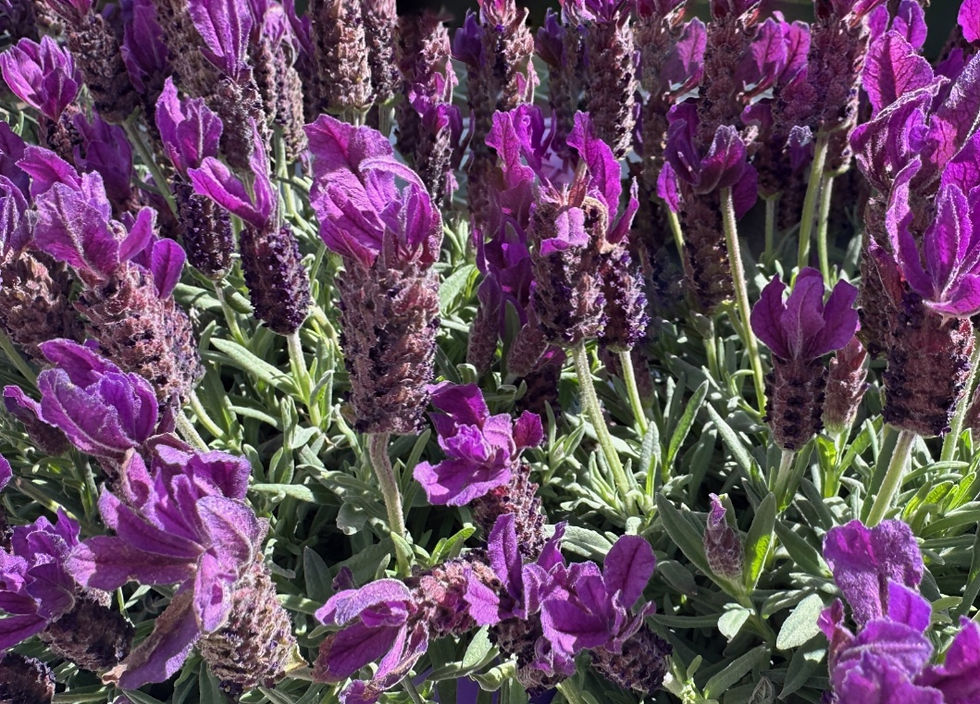
Botanical name: Lavandula angustifolia
Synonyms/Common Names: Lavandula officinalis, Lavandual vera, garden lavender, common lavender
Family: Lamiaceae
Parts used: Flowering tops
Extraction Method: Steam distillation
Planet: Mercury
Element: Air
Yin Yang Quality: Yang
Primary Constituents: According to Petersen (2020) more than 100 constituents make up the essential oil with linalyl acetate having the highest content. Other constituents include: linalol, lavandulol, lavandulyl acetate, terpineol, cineole, limonene, ocimene caryophyllene. In a 2023 review article 44 constituents were identified with the major ones being linalyl acetate (27.5%) linalool (24.1%), E-β-ocimene (7.0%), terpinen-4-ol (5.1%) caryophyllene (4.5%), carvacrol (4.4%), lavandulyl acetate (3.5%), Z-β-farnesene (3.3%), and -Z-β-ocimene (3.2%) (Kozuharova et al., 2023).
Therapeutic Actions: Analgesic, antispasmodic, anticonvulsive, antidepressant, anti-hyperpigmentation, anti-inflammatory, antimicrobial, antirheumatic, antiseptic, antitoxic, carminative, cholagogue, deodorant, diarrhetic, emmenagogue, hypotensive, insecticide, nervine, parasiticide, rubefacient, sedative, stimulant, and vulnerary.
The effectiveness of Lavandula angustifolia essential oil inhalation on sleep and menopausal symptoms in 35 postmenopausal women with insomnia was examined in a double-blind, randomized experiment. The results demonstrate that the participants in the aroma group had improved overall sleep efficiency, quality, and pattern (Lucena et al., 2021b).
A placebo-controlled clinical trial of lavender essential oils for treatment of headaches with forty-seven patients, showed inhaling lavender essential oil may be a useful and safe therapeutic option for migraine headaches that are in their severe stages (Sasannejad, 2012).
Effects on Mind, Body, and Emotions: Calming and stimulating, mood-uplifting and balancing.
Healing Benefits: Relieves symptoms of headaches, insomnia, amenorrhea, asthma, cough, flatulence, hypertension, indigestion, nausea, neuralgia, rheumatism, arthritis, eczema, ulcers, and burns.
Skin and Hair Care: Relieves acne, dandruff, dermatitis, eczema, and hyperpigmentation.
Chakra: Heart Chakra (calms and balances the heart), Throat Chakra (clears the mind and stimulates communication), Crown Chakra (encourages spiritual enlightenment).
Safety Data: Non-toxic, non-irritant, and non-sensitizing.
Warning: WebMD reports in rare cases, skin sensitivity is possible. Lavender may induce drowsiness and slow respiration. Sleepiness and slowed breathing are additional side effects of some drugs known as sedatives. Combining lavender with sedative drugs may result in respiratory issues and/or excessive drowsiness. It is strongly recommended to stop using lavender two weeks before a planned surgery. In the event of an emergency surgery, notify your doctor that you have been taking lavender.
Do not use undiluted. Do not take internally unless the under the care of a professional aromatherapist.
Lavender is a multipurpose essential oil that is great to use during a Reiki healing session. I have also Reiki-charged it with the intention of healing and balance for pain massage blends. I might mix a diffuser blend of 3 drops of lavender, 4 drops of bergamot, and 1 drop of rose to create a soothing and inspiring atmosphere for a Reiki session. Bergamot is calming and mood-uplifting, improves mental clarity, and brings in positive energy through the root chakra. It stimulates balanced personal power in the solar plexus chakra, and activates love that radiates from within the heart chakra. Rose is calming and mood-uplifting. It stimulates love, compassion, hope and patience in the heart chakra and helps to stimulate a spiritual connection in the crown chakra.
Lavender oil is light yellow to clear in color with a light, floral, and slightly sweet aroma. In addition to the above-mentioned oils it blends well with most oils including: cedarwood atlas, cedarwood Virginia, clary sage, cypress, gardenia, geranium, honeysuckle, eucalyptus, frankincense, lemon balm, marjoram, myrrh, oregano, patchouli, peppermint, petitgrain, pine, rosemary, rosewood, sandalwood, ylang ylang, and all citrus and spice oils.
Petersen, D. (2020). Aromatherapy Materia Medica Essential Oil Monographs. American
College of Healthcare Sciences.
Petersen, D. & ACHS Aromatherapy Department. (2020). Therapeutic Action Guide (20th
Edition). American College of Healthcare Sciences.
Sasannejad, P., Saeedi, M., Shoeibi, A., Gorji, A., Abbasi, M., & Foroughipour, M. (n.d.).
Lavender Essential Oil in the Treatment of Migraine Headache: A Placebo Controlled
Clinical Trial. European Neurology, 67(5), 288–291. https://
© 2025


Comments